Why Middle Eastern Perfumes Last Longer: The Full Story
This post contains affiliate links. I earn a small commission at no cost to you.
The Question That Started This Whole Conversation
When I first started paying attention to how long fragrances actually lasted on my skin, I noticed a pattern I couldn’t explain. The fragrances that consistently outperformed everything else in my collection — the ones still registering on skin eight, ten, twelve hours after application — were almost all Middle Eastern. Lattafa. Khadlaj. Gulf Orchid. Ard Al Zaafaran. The fragrances costing under $30 were outlasting designer alternatives at $100 or more. I wanted to understand why. This is Part 4 of a four-part series on fragrance concentration — the closing chapter — and it’s the one that brings everything together. Explored through my tested collection in 2026.
Why Middle Eastern Perfumes Last Longer: Concentration by Default
The first and most direct explanation is concentration. As covered in Part 1, fragrance longevity is significantly determined by how much fragrance oil is in the bottle — and Middle Eastern fragrance houses routinely formulate at EDP or extrait concentration by default, at prices that typically correspond to EDT in the mainstream designer market.
This is not a coincidence or an accident of economics. It reflects a deliberate priority in Middle Eastern perfumery: a fragrance that doesn’t last is not doing its job. Longevity and sillage — the trail a fragrance leaves — have historically been core quality markers in the Middle Eastern fragrance tradition in a way they haven’t always been in Western mainstream fragrance, where lighter, fresher, more ephemeral compositions have dominated for decades.
Khadlaj Caffe Latte is an extrait de parfum at $32.82. Lattafa Angham is an EDP at under $25. Ard Al Zaafaran Milena is an EDP at $27.99. These concentration levels are not exceptional in the Middle Eastern fragrance space — they’re standard. The same concentration in a mainstream designer fragrance would typically cost significantly more.
Why Middle Eastern Perfumes Last Longer: Base Note Construction
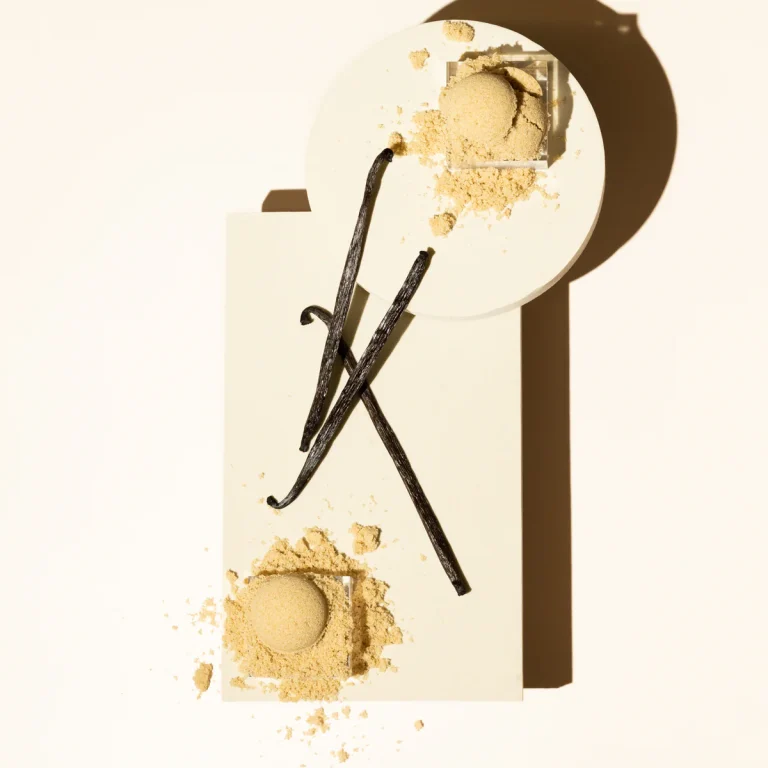
The second explanation goes deeper than concentration alone. Middle Eastern fragrances are disproportionately built on base-heavy oriental constructions — oud, amber, musk, resins, vanilla, sandalwood, patchouli — materials that are inherently tenacious and cling to skin and clothes for hours beyond the point where top and heart notes have faded.
This is not purely a stylistic choice, though it reflects genuine aesthetic priorities. These materials are the building blocks of the traditional Middle Eastern fragrance tradition — oud in particular has been central to Arabian perfumery for centuries, valued not just for its scent but for its extraordinary longevity and the way it anchors other notes around it.
Gulf Orchid Vanilla on the Beach gives me 10 to 12 hours consistently. The base is amber, tonka, and musk — dense, anchoring materials that give the fragrance staying power the note list barely hints at. Lattafa Opulent Oud anchors on oud — one of the most tenacious materials in perfumery — and the longevity follows directly from that construction. These aren’t fragrances that happen to last long. They’re built to last long from the base up.
Why Middle Eastern Perfumes Last Longer: Cultural Priorities in Perfumery
The third explanation is cultural — and it’s the one that explains why the concentration and base note priorities exist in the first place.
Fragrance in the Middle East is not primarily a fashion accessory or a finishing touch. It’s embedded in hospitality, religious practice, social identity, and daily ritual in ways that don’t have direct equivalents in Western fragrance culture. The expectation that a fragrance should be present, persistent, and noticeable — that it should fill a space and last through an occasion — is built into the cultural relationship with fragrance itself.
This cultural context shaped what Middle Eastern perfume houses prioritized when they developed their formulas. A fragrance that disappears after two hours is not serving the purpose fragrance is expected to serve. So longevity, sillage, and base weight were built in from the beginning — not as premium features but as baseline expectations.
This is part of why affordable Middle Eastern houses like Lattafa and Khadlaj, operating at accessible price points, still deliver performance that Western mainstream houses reserve for premium tiers. The performance standard is different because the cultural expectation is different.
What This Means for Building an Affordable Wardrobe
Understanding why Middle Eastern perfumes perform the way they do changes how you approach building a fragrance wardrobe on a budget.
If longevity is a priority for a given wardrobe slot, looking first at Middle Eastern houses is not a compromise or a budget concession — it’s the most rational starting point. The concentration and base note construction that drives longevity is standard rather than exceptional in this space, which means you’re comparing Middle Eastern house standards against designer premium tiers and frequently getting the better outcome.
The specific fragrances that demonstrate this most clearly in my collection: Gulf Orchid Vanilla on the Beach for extraordinary longevity at under $25, Lattafa Khamrah for proven spiced gourmand longevity at under $24, Ard Al Zaafaran Milena for beast mode EDP performance at under $28, and Lattafa Angham as the benchmark for what affordable Middle Eastern longevity looks like when the composition is also refined and complex.
None of these are exceptional outliers. They represent what this fragrance space delivers consistently when it’s operating at its standard level of quality.
The Conversation This Series Has Been Building Toward
Starting from the simple question of what perfume and cologne actually mean, this series has been working toward a single practical conclusion: the concentration and construction priorities of Middle Eastern fragrance houses represent genuinely exceptional value for anyone building a fragrance wardrobe with performance in mind.
Understanding concentration (Part 1), understanding when it’s worth paying for (Part 2), and correcting the myths that complicate the decision (Part 3) all lead here: to a fragrance tradition that built longevity and sillage in as standard features, priced its products accessibly, and has been quietly outperforming its mainstream competitors for years.
The wardrobe building framework covers how to turn that understanding into a deliberate collection. The long lasting affordable perfume buying guide has the specific fragrances worth knowing about. And the why doesn’t my perfume last education post covers the full longevity picture — concentration, skin chemistry, and base note construction together.
Middle Eastern perfumery didn’t set out to disrupt the fragrance industry. It set out to make fragrances that lasted, that filled a room, that stayed with you through an occasion. The fact that it did all of that at prices the mainstream market couldn’t match is the happy consequence of a tradition that never confused packaging with performance.
FAQ
Middle Eastern fragrances typically last longer for two main reasons: concentration and base note construction. Most Middle Eastern houses formulate at EDP or extrait concentration by default — higher than the EDT standard in mainstream designer fragrance at equivalent prices. They also predominantly use heavy oriental base notes like oud, amber, musk, vanilla, and resins, which are inherently tenacious materials that anchor fragrance on skin for extended periods.
Quality is difficult to compare across traditions, but Middle Eastern fragrances consistently deliver superior longevity and projection at lower price points than mainstream designer alternatives. This reflects cultural priorities — longevity and sillage are baseline expectations in Middle Eastern perfumery rather than premium features — and formulation choices that favor concentration and base note weight.
Oud — agarwood resin — is one of the most tenacious materials in perfumery. It clings to skin and fabric for hours or days and has an exceptionally slow evaporation rate compared to most fragrance materials. Fragrances built on an oud base benefit from this tenacity — the oud anchors the other notes and extends the overall longevity of the composition significantly.
From tested experience, Gulf Orchid, Lattafa, Khadlaj, and Ard Al Zaafaran consistently deliver strong longevity. Gulf Orchid Vanilla on the Beach gives 10-12 hours on skin. Lattafa Angham and Khamrah are reliable long-lasting performers. Khadlaj Caffe Latte as an extrait delivers exceptional base longevity. Ard Al Zaafaran Milena offers beast mode projection and long wear as an EDP.
Yes — many Middle Eastern fragrances are well-suited to everyday wear, particularly EDPs with balanced compositions that project confidently without being overwhelming. The longevity advantage means fewer applications throughout the day, and the price advantage means building a varied everyday rotation is accessible without significant investment.