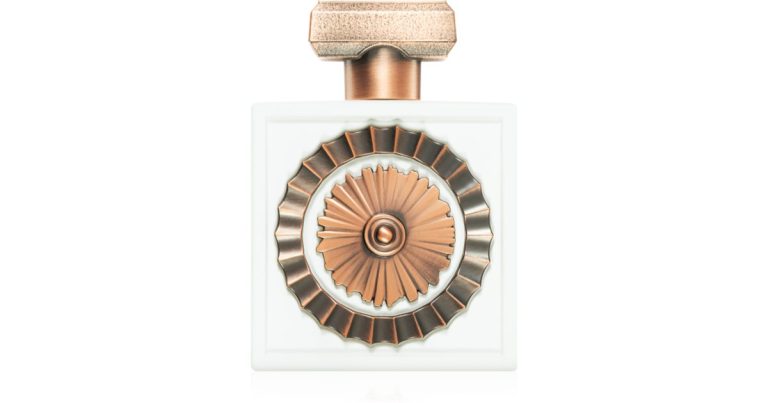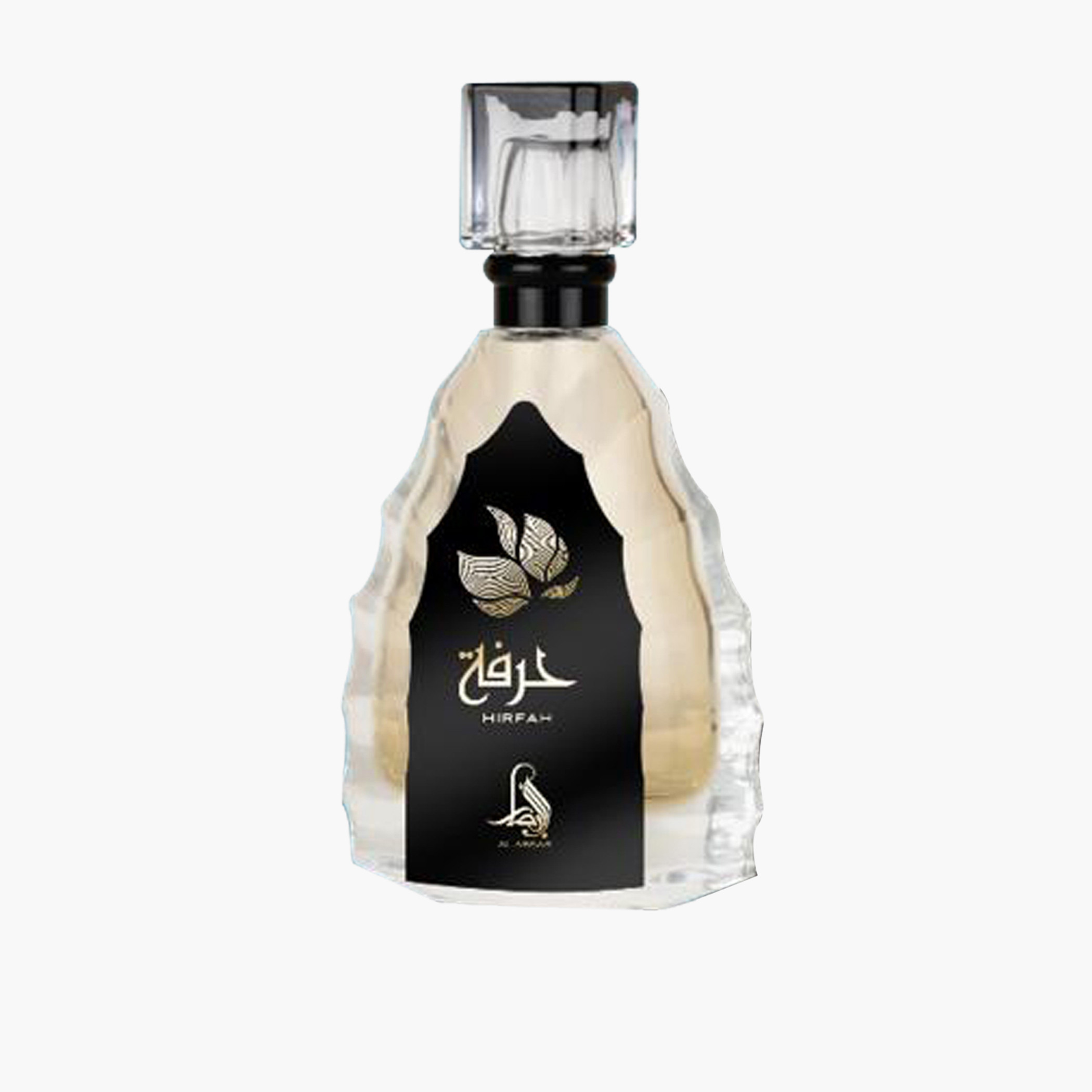
Al Absar Hirfah Review: The Affordable Angham Twin
This post contains affiliate links. I earn a small commission at no cost to you.
I Knew It Smelled Like Something. Then the Lavender Kicked In.
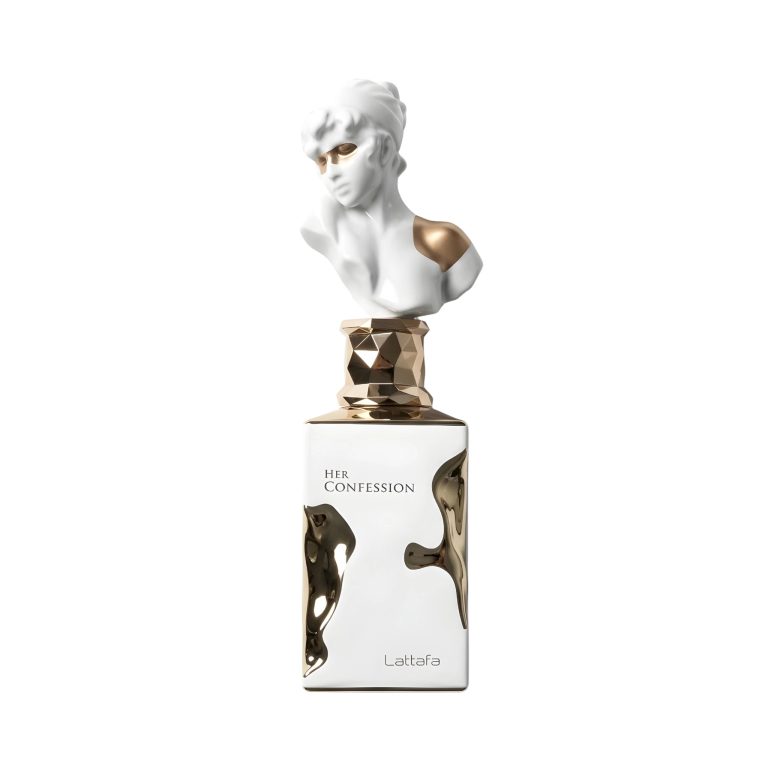
Lattafa Angham is one of my top five favourite fragrances. I keep a backup bottle. I am not casual about it. So when I sprayed Al Absar Hirfah and spent the first few seconds trying to place a familiar smell — and then the lavender arrived and everything clicked — it was one of those genuinely exciting fragrance moments. The kind where you stop what you’re doing and spray it again just to confirm what you’re smelling.
This Al Absar Hirfah review is the honest account of a fragrance that sits so close to one of my most loved bottles that the comparison is impossible to avoid — and genuinely worth making.
Executive Summary
Hirfah opens with a fruity black currant note that moves quickly into the lavender and jasmine heart — and from that point forward, it is nearly impossible to distinguish from Angham on skin. The dry-down is a warm vanilla-lavender-musk base that mirrors Angham so closely that telling the two apart becomes a genuine exercise. The distinction, after a couple of hours, is subtle: Hirfah carries a bit more lavender, Angham leans slightly more into vanilla. For a confirmed vanilla lover that difference matters. For most people wearing either of these — it won’t.
Key Takeaway: Al Absar Hirfah is an Angham twin at a lower price point. If you love Angham, you’ll love Hirfah. If you’ve never tried Angham but love lavender-vanilla fragrances, Hirfah is the more accessible entry point — and at $19-22, the value case is hard to argue with.
The Notes: Al Absar Hirfah
Top: Black Currant, Pink Pepper, Bergamot Heart: Jasmine, Lavender Base: Vanilla, Ambergris, Musk
(Full breakdown on Fragrantica)
On paper this is an oriental spicy fragrance. On skin it wears as a lavender-vanilla with a fruity opening that fades quickly — warm, elegant, and immediately familiar if you know Angham.
[Shop Al Absar Hirfah on Amazon — $22 as of post date]
First Impressions: Fruity, Then Familiar
The opening is where Hirfah distinguishes itself most clearly from Angham. The black currant comes through as a genuine fruity note in the first few seconds — brighter and a touch more intense than Angham’s opening, which is lighter and more immediately aromatic. The bergamot and pink pepper are present, but they’re supporting the black currant rather than leading.
It’s fruitier and a bit more intense up top — but only for a moment. Because then the lavender arrives. And the moment it does, anyone who knows Angham will know exactly what they’re smelling.
Development: Where the Twins Become Indistinguishable
The heart is where any meaningful separation between Hirfah and Angham effectively disappears. Jasmine and lavender together produce the same elegant, slightly aromatic floral accord that makes Angham’s heart so distinctive — warm without being heavy, feminine without being soft. The lavender here isn’t sharp or medicinal. It’s smooth and beautifully integrated, exactly as it is in Angham.
If you handed someone familiar with Angham a blind spray of Hirfah at this stage and asked them to identify it, I genuinely think most of them would call it Angham without hesitation. That’s how close this is.
What Hirfah does in the heart that Angham doesn’t quite replicate is carry a little more lavender presence — the aromatic quality stays slightly more prominent throughout the heart phase. It’s a very subtle distinction. But if you’re paying close attention, it’s there.
Dry-Down and Performance: Al Absar Hirfah Review Numbers
The dry-down is where the one meaningful distinction between the two fragrances lives. After a couple of hours, Hirfah settles into a lavender-forward vanilla-musk base where the lavender remains a faint but perceptible accent beneath the warmth. Angham, by comparison, tips slightly more toward vanilla in the same phase — and for a confirmed vanilla lover, that distinction matters even if it’s subtle.
Both fragrances are otherwise identical in dry-down character. The warmth, the musk depth, the overall feel — the same. If vanilla is your priority, Angham edges it out. If lavender-forward is your preference, Hirfah might actually be your first choice.
- Longevity: Comparable to Angham — strong, all-day performance
- Projection: Comparable to Angham — moderate, present without being loud
- Best Season: Year-round — the lavender keeps it fresh in warmer months, the vanilla base grounds it in cooler weather
- Best Context: Everyday wear, work, any occasion that suits a warm and elegantly composed aromatic fragrance
Does Al Absar Hirfah Earn Wardrobe Space?
- Role it fills: Lavender-vanilla aromatic with a fruity opening — the same role Angham fills, with a slightly more lavender-forward dry-down
- Gap it fills: For anyone without Angham, this fills that slot completely and at a lower price. For anyone who already has Angham, the gap is minimal — it’s essentially a duplicate of an existing wardrobe slot.
- Duplication risk: High — against Angham specifically. Low against everything else in the collection.
Hirfah is staying. It’s a beautiful fragrance that earns its keep on its own merits, not just as an Angham adjacent. But a backup bottle isn’t happening — not while Angham is available and already occupying this role. If Angham were ever discontinued or unavailable, the answer to what comes next would be immediate.
Hirfah vs Angham: The Honest Side by Side
Both fragrances share the same lavender-jasmine-vanilla DNA. The differences are real but minor:
- Opening: Hirfah is fruitier and more intense. Angham is lighter and more immediately aromatic.
- Heart: Nearly identical. Hirfah carries slightly more lavender presence.
- Dry-down: Both warm and vanilla-musk forward. Angham leans slightly more vanilla. Hirfah leans slightly more lavender.
- Price: Hirfah at $19-22. Angham at $37.59. Hirfah wins on value by a significant margin.
- Verdict: If you have Angham, Hirfah is a pleasant discovery that doesn’t displace it. If you don’t have Angham, Hirfah might be everything you need — and at almost half the price.
Who Should Buy Al Absar Hirfah
- Angham lovers who want a slightly more affordable version of that same profile in their collection
- Anyone who loves lavender-vanilla fragrances and hasn’t found their perfect version yet — this is a strong candidate
- Buyers building a wardrobe on a tighter budget who want Angham-adjacent quality at a lower entry point
- Middle Eastern fragrance fans looking for a lesser-known gem that performs at the level of much more talked-about options
Who Should Skip It
- Anyone who already has Angham and doesn’t want a near-duplicate taking up wardrobe space
- Buyers who specifically prefer vanilla-forward over lavender-forward in the dry-down — Angham is the better call
- Those looking for something genuinely distinct from anything else in the Middle Eastern fragrance space — Hirfah is excellent but it doesn’t break new ground
Final Verdict: Al Absar Hirfah Review
Al Absar Hirfah is a near-perfect Angham twin at a lower price point — and that framing sells it slightly short, because it’s also just a genuinely beautiful fragrance on its own terms. The lavender-vanilla-musk composition is elegant, well-blended, and comfortable to wear anywhere. The fruity opening adds interest without staying long enough to become the point. The dry-down is warm and quietly lovely.
Would I replace Angham with it? No. Angham edges it out in the dry-down vanilla — and when you love vanilla the way I do, that matters. But if Angham disappeared tomorrow, this would be on my wrist the next morning.
Rating: 4.5/5 — An Angham twin that earns the comparison honestly. The best affordable alternative to one of my top five favourite fragrances.
[Shop Al Absar Hirfah on Amazon — $22 as of post date]
If this is your first introduction to the lavender-vanilla-musk profile and you want to understand why Angham sits in a top five spot, the Lattafa Angham review covers the original in full detail. And if you’re building a wardrobe where every fragrance earns its own distinct role rather than duplicating an existing one, the wardrobe-building framework is the place to start.