How to Tell If a Cheap Perfume Is Actually Worth Buying
This post contains affiliate links. I earn a small commission at no cost to you.
Because “It’s Only $10” Is Not a Purchasing Strategy
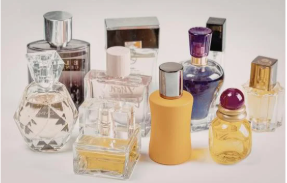
There’s a specific kind of confidence that comes with buying cheap perfume. The price is low enough that the decision feels consequence-free — a small experiment, a casual addition, a blind buy that doesn’t need much justification. And on its own, that logic mostly holds. A $9 fragrance that doesn’t work isn’t a financial disaster.
The problem is that wardrobe space isn’t free, even when the bottles are. Every affordable purchase that doesn’t earn its place is sitting in a shelf slot, a rotation position, and a mental category that something better could be filling. Repeat that cycle across ten or fifteen low-stakes purchases and the shelf fills with bottles that individually cost almost nothing and collectively represent exactly the kind of clutter that makes a fragrance wardrobe feel overwhelming instead of satisfying.
That’s the real cost of the cheap perfume impulse buy. Not what you paid. What you accumulated.
Executive Summary
Cheap perfume isn’t automatically a bad purchase. But most cheap perfume purchases are unintentional ones — driven by the removal of price friction rather than genuine wardrobe need. The difference between an affordable fragrance that earns its place and one that becomes clutter has nothing to do with the price tag and everything to do with purpose, performance, and placement within a structured wardrobe.
Key Takeaway: Cheap perfume becomes expensive when it’s repetitive, impulsive, or undefined. An intentional budget fragrance has a clear role, realistic performance expectations, and repeat wear value. The price is never the justification — the purpose is.
Why Cheap Perfume Bypasses Your Better Judgment
Before the framework, the honest psychology — because understanding why cheap perfume sidesteps careful thinking is the first step toward buying it better.
Every purchase involves a friction calculation. The higher the price, the more that friction slows you down — more deliberation, more justification, more consideration of whether the purchase actually serves a need. That friction is useful. It creates space for a wardrobe lens to operate.
Low price removes that friction almost entirely. A $9 fragrance doesn’t trigger the same questions as a $90 one. Does this fill a gap? Does it duplicate something I already own? Will I actually wear this? Those questions get skipped not because the answers don’t matter but because the price makes them feel unnecessary.
The result is a buying pattern that feels like smart, low-risk experimentation and functions like quiet accumulation. Individual purchases stay justifiable. Collective redundancy builds invisibly. And the shelf fills with bottles that were all reasonable at the time and collectively represent a wardrobe that doesn’t actually work.
What Actually Goes Wrong With Budget Fragrances
Evaluating a cheap perfume well means understanding what specifically tends to fail in this price range — because the failure modes are different from what makes an expensive fragrance disappointing.
Blend instability is the most common one. The opening smells promising, then the dry-down turns synthetic or sour and the fragrance you thought you were buying reveals itself as something else entirely twenty minutes in. A budget fragrance with a genuinely stable, coherent blend from first spray to dry-down is worth significantly more than its price suggests. One that collapses in the heart is worth nothing regardless of how good the opening was.
Projection that disappears after the first hour is the second most common failure. Budget fragrances frequently open with impressive presence and then fade to almost nothing before the dry-down develops. This isn’t automatically a dealbreaker — a skin scent at a low price can be exactly what a wardrobe needs — but it’s a problem when the fragrance was purchased for presence and delivers none.
Note list dishonesty is particularly common in the affordable fragrance space. A list that promises smoke, oud, and woods frequently delivers one flat accord with none of the promised complexity. The gap between what a budget fragrance lists and what it delivers on skin is wider here than in any other price tier — which is exactly why testing before committing matters more here than anywhere else.
Synthetic sharpness on opening is common and not always fatal — many budget fragrances need ten to fifteen minutes to settle. But sharpness that persists through the heart and into the dry-down is a quality failure that no amount of wearing will fix.
The Five Tests That Separate Intentional From Impulsive
Test One: Does it fill a genuine gap? Not a general category — a specific, named role in your current wardrobe that isn’t already covered. A soft layering base. An office-safe daily vanilla. A seasonal placeholder while you save for something better. If the role it fills already has a bottle assigned to it, this purchase is duplicating a slot that’s occupied. The fact that the duplicate costs $9 doesn’t make it less redundant. It makes it easier to accumulate without noticing.
Test Two: Does it have a defined function? Every intentional fragrance needs a job — and “it smells nice” is not a job description. If you can’t describe what this fragrance does in your wardrobe in one clear sentence, the function isn’t defined and the purchase is likely impulsive. A layering base that adds vanilla warmth underneath more complex fragrances is a function. A soft musk for low-stimulation days is a function. Vague appeal is not.
Test Three: Does performance match expectation? A $9 fragrance with two hours of soft skin-scent projection is a good purchase if you needed a subtle everyday option and knew what you were getting. It’s a bad purchase if you needed six hours of cold-weather projection and assumed price wouldn’t affect performance. Calibrate expectations before the purchase, not after it — and let the performance profile be part of the evaluation rather than a surprise.
Test Four: Is the blend stable? Test this before committing to a full bottle wherever possible. A decant, a sample, a store tester — anything that lets you wear the fragrance through a full development cycle on skin. You’re looking for coherence: does the opening transition smoothly into the heart, does the dry-down feel like a natural continuation of what came before, does the whole thing hold together or does it fall apart somewhere in the middle? Stable blend at a budget price is a meaningful quality signal. Unstable blend at any price is a reason to walk away.
Test Five: Does it have repeat wear value? This is the retrospective test — applied to bottles you already own before buying more in the same category. Have you willingly reached for this fragrance three or more times since you bought it? Not to test it. Not to give it a fair chance. But because you actually wanted to wear it? If the answer is no, it served a novelty function rather than a wardrobe function. Novelty has value — but novelty and wardrobe integration are different things, and a bottle that sits unworn after the first few wears is occupying space without earning it regardless of what it cost.
The $25 Reality Check
Three $9 fragrances you barely wear cost $27.
That’s frequently the price of one solid mid-tier fragrance you’d reach for consistently, that performs reliably, and that fills a genuine wardrobe role with enough quality to justify permanent shelf space.
Cheap becomes expensive when it repeats. Intentional stays affordable because it doesn’t.
The 60-Second Pre-Purchase Check
Before any affordable fragrance purchase, run these four questions:
Does this fill a role my wardrobe genuinely doesn’t have covered? Would I still want this if it weren’t trending, recommended, or discounted? Can I explain its specific function in one sentence? Will I realistically wear this five or more times in the next three months?
Hesitation on most of these isn’t guilt. It’s information. Clarity about what a purchase actually is — novelty, experiment, genuine wardrobe need — makes better buying inevitable over time.
Frequently Asked Questions About Buying Cheap Perfume
Four things to look for: blend stability from opening through dry-down, projection that matches what the fragrance was purchased for, a note list that delivers what it promises on skin, and repeat wear value after the novelty fades. A cheap perfume that passes all four tests is a genuinely good purchase regardless of price. One that fails any of them isn’t worth the shelf space even at $9.
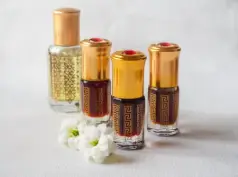
Some do, some don’t — and the category averages shorter longevity than mid-tier or niche fragrances. But longevity in budget fragrance varies significantly by brand and composition. Many affordable Middle Eastern fragrances perform exceptionally well precisely because they use resinous, amber-based materials that anchor longevity naturally. Price is a poor predictor of longevity. The resinous base notes in the composition are a much better one.
Yes — when bought intentionally. The affordable fragrance space, particularly Middle Eastern and Arabian releases, contains genuinely excellent options that fill wardrobe roles with enough quality to justify permanent shelf space. The problem isn’t the price category. It’s buying without a defined role, realistic performance expectations, and a clear understanding of what gap the fragrance is filling.
Usually one of four things: synthetic sharpness in the opening that doesn’t resolve, blend instability where the composition falls apart in the heart or dry-down, note list dishonesty where the listed notes don’t show up on skin, or projection that disappears before the dry-down develops. None of these are universal to budget fragrance — they’re execution failures that happen to be more common at lower price points.
Final Verdict
Cheap perfume isn’t the problem. Unstructured buying at any price point is the problem — and low prices simply make unstructured buying easier and faster than it would otherwise be.
The affordable fragrance space is genuinely full of excellent options that earn permanent wardrobe space, perform beyond their price, and fill roles that more expensive alternatives don’t cover better. Finding those options requires the same evaluation as any other purchase: defined role, realistic performance expectations, stable blend quality, and repeat wear value.
Apply the five tests. Run the 60-second check. Do the $25 math before the third similar bottle ends up in the cart.
Buy confidently. Buy clearly. And let the price be the last consideration rather than the first.
Understanding why cheap perfume is so easy to overbuy is half the battle. The fragrance overconsumption guide covers the emotional triggers — and the 10-bottle wardrobe framework gives every future purchase a role before it reaches your shelf.