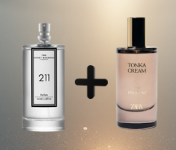
Layering Fixes: How to Improve Weak or Disappointing Perfumes
Not every disappointing perfume needs to be decluttered. Many weak or unbalanced fragrances can be fixed through strategic layering. The key is understanding what’s missing — depth, projection, sweetness control, or structure — and layering intentionally.
Most “disappointing” perfumes aren’t bad — they’re just unbalanced.
Key Takeaway
Most disappointing perfumes aren’t failures — they’re unbalanced. Layering isn’t about adding more scent. It’s about correcting what’s missing.Before You Layer Again
Before You Layer Again
- Identify what’s wrong first.
- Layer to fix one issue — not three.
- Test on skin, not paper.
- Adjust placement before adjusting volume.
Step 1: Identify the Problem
Layering should solve something specific.
Is the perfume:
- Too weak?
- Too sweet?
- Too sharp?
- Too flat?
- Too linear?
Don’t layer randomly. Diagnose first.
Step 2: Fix by Category
If It’s Too Weak
Add:
- Musk base
- Amber base
- Sandalwood
- Vanilla extract-style enhancer
Apply stronger scent to clothing.
Apply weaker scent to pulse points.
If It’s Too Sweet
Add:
- Light woody fragrance
- Dry musk
- Citrus-forward scent
Sweet + dry = balance.
If It’s Too Synthetic
Add:
- Creamy vanilla
- Soft floral
- Clean musk
Smooth scents buffer sharp edges.
If It’s Too Linear
Add contrast.
Flat vanilla?
Layer with light spice or citrus.
Single-note floral?
Add subtle wood.
Strategic Application Matters
Where you spray changes the outcome.
Example structure:
- Dense fragrance → back of clothes
- Softer scent → neck and chest
- Balance layer → wrists
Heat zones amplify sweetness.
Clothing amplifies longevity.
When NOT to Layer
Don’t layer:
- If both scents are already heavy
- If both are syrupy gourmands
- If projection becomes overwhelming
Layering is enhancement — not chaos.
Example Use Cases
Final Takeaway
Layering is not about creating something new.
It’s about correcting imbalance.
If you approach it strategically, you can turn “disappointing” into wearable — and save money in the process.
If you don’t know what you’re fixing, layering will only make it louder — not better