The Lattafa Duplication Problem: When More Is Less
This post contains affiliate links. I earn a small commission at no cost to you.
The Brand That Makes Too Much of a Good Thing
Lattafa is one of the most exciting affordable fragrance houses in the world. I mean that without qualification. The depth they achieve at $20 to $35 per bottle is something most Western brands cannot replicate at three times the price. They have earned their reputation, and they have earned it honestly.
They also release fragrances at a pace that is, at this point, genuinely difficult to keep up with. New bottles appear constantly, sometimes weekly. The catalogue has grown to a size where even dedicated collectors lose track of what exists. And when a house produces at this volume, something almost inevitable begins to happen: the fragrances start competing with each other.
I noticed it clearly in spring 2026 when I wore Lattafa Oud Mood back to back with Lattafa Opulent Oud. The two fragrances share the same oud-forward oriental DNA, the same saffron warmth, the same resinous base. The difference between them is weight and longevity, not character. Oud Mood is simply a lighter, shorter-lasting version of a story Opulent Oud tells better. One of them earns a permanent wardrobe slot. The other does not. And crucially, if you buy both without testing them side by side, you may not realise until much later that you have spent money on the same experience twice.
That is the Lattafa duplication problem. And Oud Mood versus Opulent Oud is far from the only example.
Why It Happens
Volume and duplication are directly linked in perfumery. When a house releases slowly, each new fragrance has space to occupy a distinct identity. When a house releases constantly, the available scent territory fills up quickly and new releases inevitably begin overlapping with existing ones.
Lattafa’s release cadence also means that the same raw material combinations appear across multiple bottles: saffron and oud, caramel and vanilla, praline and amber. These combinations work, which is precisely why they recur. But when they recur often enough, the catalogue starts to feel like variations on a small number of themes rather than a genuinely diverse collection.
This is not a criticism of the quality. A Lattafa fragrance at $25 that shares DNA with another Lattafa at $25 is still a good fragrance at $25. The problem is the consumer experience: when you cannot easily tell two bottles apart without wearing them side by side for an hour, the catalogue becomes difficult to navigate and the risk of buying something you already own, in slightly different packaging, becomes real.
The Clearest Examples in the Catalogue
Oud Mood versus Opulent Oud: The most direct case I have encountered personally. Same oud-saffron-resin profile, same warmth and sweetness in the heart, same base character. Opulent Oud is denser, richer, and longer-lasting. Oud Mood is the lighter version. There is no use case where you need both.
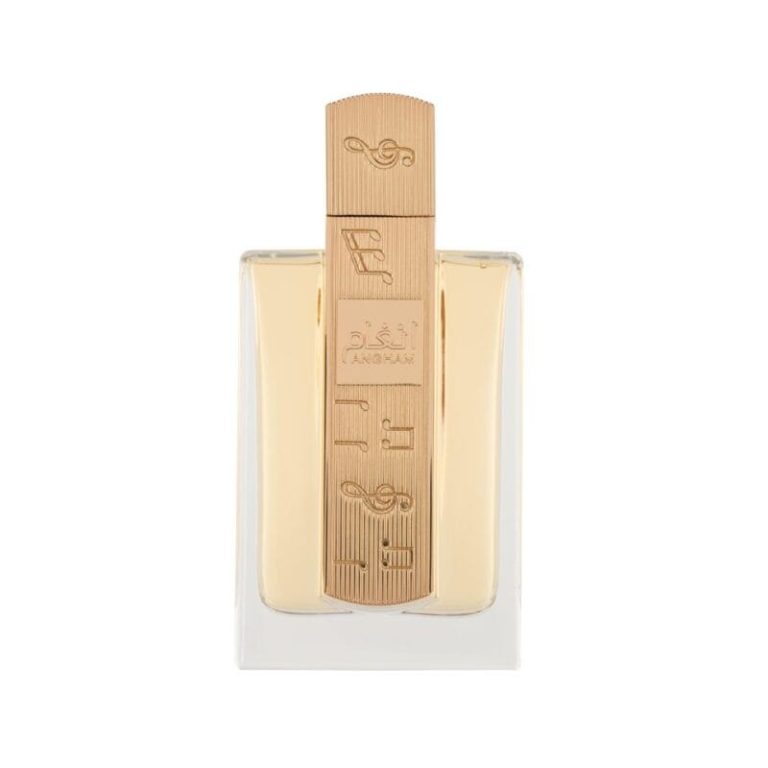
Angham versus Angham Second Song: These two are less a duplication case and more a lesson in how a house can take the same name in a completely different direction. The original Angham is an elegant floral vanilla. It is refined, evening-appropriate, and holds a permanent wardrobe slot. Second Song moves away from that identity entirely into fruitier, lighter territory: pear blossom and bergamot replace the spice, praline and peony soften the heart. The two fragrances share a name and almost nothing else. These are two distinct fragrances that happen to share a name, and the Angham name is the only thing likely to confuse you into thinking you are buying a variation of something you already own.
Khamrah versus the Khamrah extensions: Khamrah itself is one of the most acclaimed affordable fragrances in the Lattafa catalogue: complex, resinous, and long-lasting. The extensions, including Khamrah Qahwa, add coffee and cardamom to the profile and create something genuinely different enough to coexist. This is the exception that proves the rule: when Lattafa extends a line thoughtfully, the results stand on their own. When they extend by simply lightening or sweetening an existing profile, the result is duplication.
The Yara family: Yara, Yara Candy, Yara Elixir. The original Yara is a tangerine, orchid, and vanilla gourmand with warmth and wearability. The extensions sweeten and fruiten progressively: Candy adds blackcurrant fizz, Elixir adds strawberry and caramel. Each release occupies a slightly different register, but the family resemblance is so strong that owning more than one requires a very specific reason. Most buyers who own all three probably should not.
What This Means for Buying
The practical lesson from the Lattafa duplication problem is not to avoid Lattafa. The lesson is to slow down before you buy.
Lattafa’s release cadence creates urgency, the feeling that you need to try the new thing before it sells out or before the community moves on. That urgency is the enemy of good wardrobe building. The fragrances are not scarce. The bottles are not limited editions. The only thing that creates the pressure to buy immediately is the pace of new releases, and that pace is a marketing dynamic, not a supply reality.
Before you buy a new Lattafa release, ask one question: do I already own something in this scent family? If the answer is yes, the new bottle needs to offer something meaningfully different to justify its place. Lighter is not different. Sweeter is not different. More vanilla is not different. A distinct note combination that creates a genuinely different wearing experience is different.
Opulent Oud earns its slot. Oud Mood does not, because Opulent Oud already covers that ground better. That is the test, and it is the only test that matters.
The Brands Worth Watching Within the Lattafa Universe
Lattafa owns or is associated with several sub-brands and related houses that sometimes offer more distinct profiles than the main catalogue. Rayhaan, for example, sits adjacent to the Lattafa universe and tends toward profiles that do not duplicate as directly. Zimaya offers a slightly darker, more resinous register. These are worth exploring if you find yourself reaching for a Lattafa alternative that does not simply repeat what you already own.
The Bottom Line
Lattafa makes exceptional fragrances. They also make too many of them, and the overlap is a real consumer problem that nobody in the affordable fragrance space talks about directly enough. The solution is not to stop buying Lattafa. The solution is to buy with your wardrobe in mind rather than your curiosity, to test before you commit, and to ask whether the new release fills a gap or simply repeats a story you already own in a different bottle.
The Lattafa duplication problem is ultimately a wardrobe discipline problem. And that is fixable.
The Oud Mood versus Opulent Oud comparison that prompted this post is covered in full in the Lattafa Oud Mood review. And if you want a framework for making these decisions before you spend rather than after, the guide on how to build a fragrance wardrobe in 10 bottles or less is exactly where to start.
FAQ
The volume is genuinely high by industry standards. The result is a catalogue where some releases overlap significantly in scent profile and DNA. That is not a quality problem but it is a navigation problem for buyers who want to build a coherent collection without duplicating scent families.
Wear them side by side if possible, ideally on different skin zones on the same day. Ask whether the difference between them is meaningful enough to justify two separate wardrobe slots. If one is simply a lighter or sweeter version of the other, buy the one you prefer and skip the other.
The ones that occupy distinct scent territory in your collection. Opulent Oud for a saffron-oud signature. Khamrah for a complex resinous gourmand. Angham for a refined evening oriental. Her Confession for a spiced floral incense. These each do something specific and none of them duplicate each other meaningfully. Start there and add only when a new release offers something those four do not.
It depends on whether the extension offers a genuinely different wearing experience. Khamrah Qahwa adds coffee and cardamom to Khamrah’s profile and creates something distinct enough to coexist. Angham and Angham Second Song are a good example of an extension done right: the original is an elegant floral vanilla, Second Song goes fruitier and lighter. They occupy different registers and serve different moods. The test is always whether the new release fills a different gap or simply repeats the same story in slightly different packaging.